
Nov 4, 2019 | Blog, Cross-Organizational Information Sharing
We’ve all been there—sitting in the waiting room of a doctor’s office, filling out redundant forms with our healthcare history. Each time, we sit with silent frustration, wondering why we must complete the same paperwork every time we visit our healthcare provider.
We wonder: It’s 2019. Shouldn’t transmitting health information from one place to another be seamless?

Oct 28, 2019 | Blog, Collaboration, Partnerships and Social Media
MITRE staff, teleworkers, and business partners are attending more and more meetings virtually from different locations. Among the options at MITRE for communicating and sharing non-sensitive information, Slack, a cloud-based team collaboration tool, has become a meeting place where people can work productively and feel comfortable—much like a virtual coffee shop.

Oct 18, 2019 | Blog, Cross-Organizational Information Sharing
Sponsors turn to us for our expertise and expect us to have the answers and to make recommendations. This role of guide can be liberating. As guides, we no longer need to have all the answers. Instead we ask provocative questions to our sponsors to elicit their own answers. (Feel free to start playing the song “Let it go” in your head.) This change in role may push both us and our sponsors out of our proverbial comfort zones. Let me tell you how this has worked in real life.
Oct 14, 2019 | Blog, Learning Organization
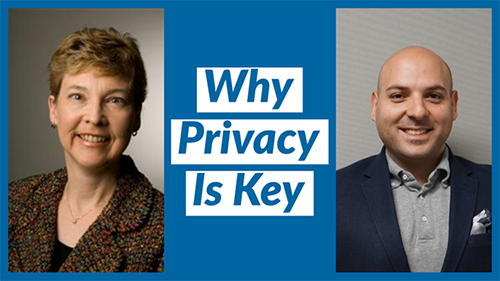
Privacy engineering involves injecting legal, policy, and ethical requirements into technology. It takes perspective to effectively manage privacy risk while keeping the big picture in focus. Fortunately, Julie McEwen, MITRE’s Privacy Engineering Capability Area Lead, is on the case. She and her team provide policy and technical privacy support to MITRE’s sponsors while managing privacy operations in support of MITRE’s Chief Privacy Officer.

Oct 1, 2019 | Blog, Machine Learning, Artificial Intelligence, and Data Science
A woman who has always identified as Ashkenazi Jewish received a DNA testing kit from one of the ancestry services and participates on a whim. Surprise! Turns out her father was actually a non-Jewish sperm donor. It’s one of many fascinating and recent cases of renegotiating identity, along with stories about an adopted child finding their true birth family, or even individuals tracing their ancestry back to someone practicing witchcraft.

Sep 23, 2019 | Blog, Cross-Organizational Information Sharing
How do we balance the desire of organizations to harness big data’s power with the need to prevent potential harm to individuals or populations? For health care, MITRE developed a framework to promote the ethical use of consumer-generated lifestyle data.
Sep 16, 2019 | Blog, Learning Organization
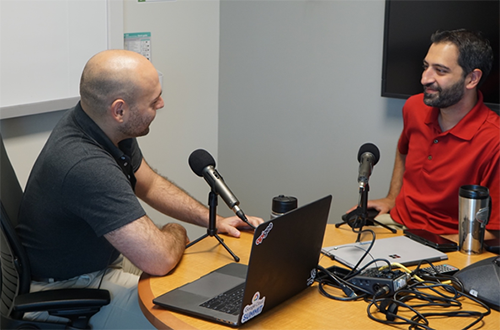
Awais Sheikh is the Capability Steward for Business Innovation here at MITRE. In this episode Awais helps us decipher a fundamental question for any organization on a mission to better the world. When you get past the hype, what is the real meaning of innovation? And perhaps more importantly, how can we get past the jargon so we can make a lasting, positive impact?
Sep 12, 2019 | Blog, Cross-Organizational Information Sharing
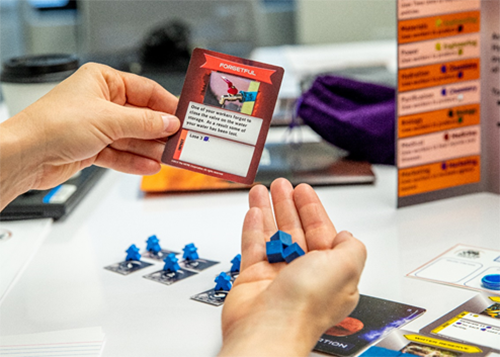
Today’s environment is one of constant change and disruption. Government organizations are greatly impacted by new technologies, new laws and policies, administration changes, and customer expectations for increased services. To carry out their missions and serve customers in this type of environment, government organizations must operate in a more agile manner and better manage constraints and demands.
Aug 30, 2019 | Blog, Cross-Organizational Information Sharing
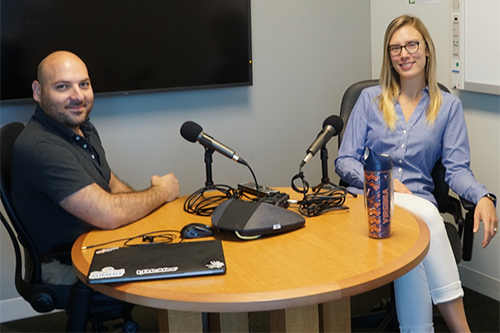
Jackie Morin is a Senior Software Engineer whose journey at MITRE started when she was a high school intern. Now she guides new interns as they journey from academia to industry! Enjoy a discussion on what it takes to be an intern (and employee) here at MITRE, as well as the steps MITRE is taking to pave the way for future employees. It’s an exploration of excellence at all levels.
Aug 19, 2019 | Blog, Learning Organization
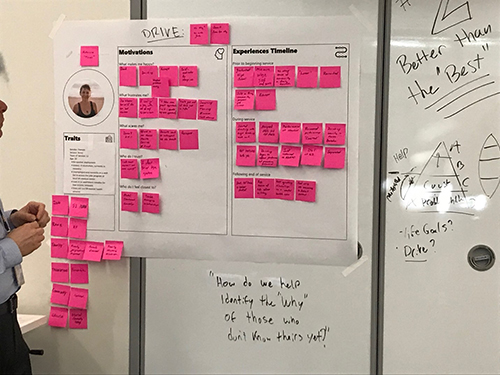
As part of their research into veteran mental health, MITRE Veterans Council members and the Design for Life MITRE Innovation Program research team hosted a design studio dedicated to hearing directly from veterans about their transition from active duty to civilian life.

Aug 12, 2019 | Blog, Learning Organization
Coming from a military background, Jay learned about computer programming at a young age and developed a passion for it that introduced him to exciting emerging technologies at Carnegie Mellon, in the Air Force, in the consulting world, and, finally, in his current work at MITRE.

Aug 7, 2019 | Blog, Learning Organization
Andy Chapman’s recent lecture, “Advanced Manufacturing: Enabling Warfighter Innovation at the Tactical Edge,” tells the story of how his team worked with the Marine Corps to develop advanced manufacturing capabilities as part of a project to adopt Small Unmanned Aerial Systems (sUAS) into Marine operations. The MITRE team’s problem-solving approach with sUAS shows that by closely examining the context of the initial goal to identify the root of the problem, it is possible to realize a more complete scope of logistical, economic, and ethical results.

Oct 28, 2018 | Blog, Machine Learning, Artificial Intelligence, and Data Science
The process of neural interactions and visual interpretation happens every time your brain wants to identify literally anything you look at.

Oct 23, 2018 | Blog, Collaboration, Partnerships and Social Media, Cross-Organizational Information Sharing
Guidance developed with FDA outlines preparedness and response recommendations for healthcare delivery organizations and others.

Sep 24, 2018 | Blog, Machine Learning, Artificial Intelligence, and Data Science
Imagine waiting 30 minutes or longer to get through to a customer service center and when your call is finally answered, you can’t understand what the service representative is saying because you have a hearing impairment. Or you place a call to your doctor but aren’t able to communicate your needs to the medical staff because your speech is impaired. Or you are a child with autism and being in a classroom and interacting with your teacher and classmates overwhelms you with anxiety.

Apr 2, 2018 | Blog, Learning Organization
When change management professionals step in to share their knowledge of how organizations can work better, they come with stories…
Mar 26, 2018 | Blog, Machine Learning, Artificial Intelligence, and Data Science
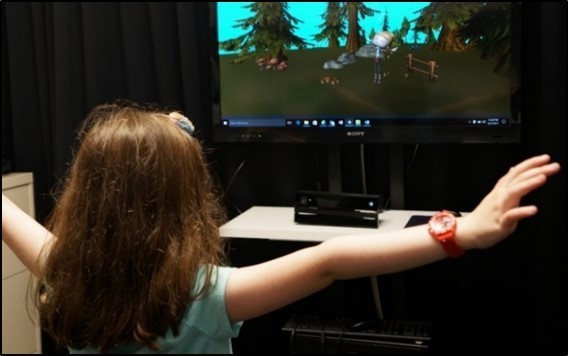
MITRE believes that data is the next medical innovation in health. How might connecting people and data reinvent the health experience? To find out, a team of researchers developed Home Assessments for Prompt Intervention (HAPI), a serious game that uses Microsoft Kinect-based joint tracking to detect critical changes in patients with cerebral palsy…

Mar 20, 2018 | Blog, Machine Learning, Artificial Intelligence, and Data Science
Applications in Data Science: Anti-Fragility in Action…

Mar 13, 2018 | Blog, Machine Learning, Artificial Intelligence, and Data Science
Data Science Practitioners…

Mar 11, 2018 | Blog, Cross-Organizational Information Sharing, Knowledge Advantage, Machine Learning, Artificial Intelligence, and Data Science
An electronic flight bag (EFB) may typically be used to replace pilots’ paper charts, but with some new developments, it could start to be more of a cognitive assistant. MITRE researchers….