






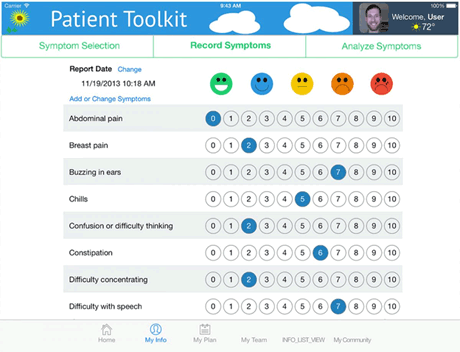
With Patient Toolkit, Sharing Improves Caring
MITRE’s Patient Toolkit mobile app enables chronically ill patients to better manage knowledge about their conditions, track their symptoms and medications, and communicate what they know to their healthcare providers. MITRE has a simple process to enable...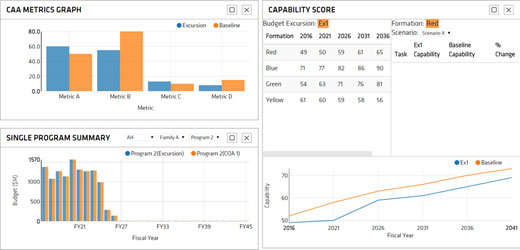
Using Immersive Visualization to Make Strategic Choices
Cognitive assistance isn’t mainstream yet, but decision support tools that enable decision-makers to understand tradeoffs in multiple dimensions are available. Shawn Chin and Rick Haberlin, who built one such tool, make the case that “engagement requires visualization...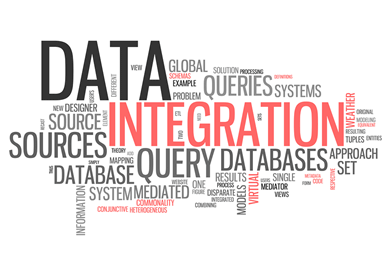
Developing an Integrated View of Analysis is Still a Challenge
Scott Lucas’s rich contribution to an ongoing conversation about how to help our sponsors understand and think about their data adds the caveat that good decisions don’t just come from the data itself, but from what organizations do with it and how they share their...
Managing Knowledge through Systems Visioneering
Even wordsmiths like Amanda Andrei know that knowledge sharing unequivocally requires that words and pictures work together to get anything valuable done. Visualization and the training that makes it possible become more valuable every day. All of the posts for April...
The Daily Standup
In Liz Hayes’s post about routine check-ins, seemingly simple collaboration processes and trust enable hard-working, distributed teams to succeed. —Editor Author: Liz HayesI joined a new project last summer, a Global Information System (GIS) effort run by Keith W....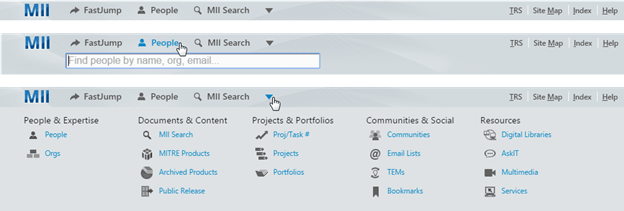
Heading for a More Mobile-Friendly Intranet
Marcia Nunes’s post on mobile-friendly headers is a good reminder that ease of use is not magic, that human factors specialists are central to user experience, and that MITRE takes their counsel seriously.—EditorAuthor: Marsha NunesProviding a consistent user...Your Guide to Connecting Projects, People, Content, and Partners
This guide describes and points to resources that help staff thrive in their assignments. It outlines the tools and systems in place for planning and execution, all in support of the way that MITRE does business. As staff enable reliable knowledge capture and reuse,...
Growing MITRE’s Shared R&D Lab for Analytic Capabilities and Resources
Authors: Marilyn Kupetz and Angela O’HanlonMITRE’s Analysis Tool Shed Lab (ATS) program is one of MITRE’s largest R&D Labs, focusing on analysis capability and analytic activity. Lab users acquire hands-on experience with 100+ tools and datasets, MITRE prototypes,...
Ending Isolation and Building a Unified Team Across Distributed Sites
As a workforce becomes increasingly distributed, it is more important than ever to facilitate, ensure, and capture collaboration in order to share knowledge effectively and efficiently; effective communication is essential to achieving business goals. As mobile...
Avoiding Single Points of Failure Through Knowledge Sharing
Knowledge management is all about making sure that all components of an organization, project, or task can work together regardless of staff rotation. We capture, store, share, analyze, and share some more precisely because who’s coming or going will change. Sadia...
From Telewho to Teleyou: Engaging as a Teleworker at MITRE
Brett Profitt’s observation that “MITRE sets teleworkers up for success, but teleworkers must endeavor to be successful” resonated. No matter how many business process tools an organization makes available, staff have to use them to good end. And he does, mentioning...
For scientists and researchers: Rich resources at the ready
MITRE’s knowledge-sharing culture incorporates many kinds of resources, from human, to traditional paper, to digital. For researchers like Melissa Dolph, the wealth of resources enables her to perform on behalf of customers and to network, both of which enrich her...
Do you MOOC? Could you? Would you gMOOC?
The phrase corporate training may sound like, well, school, but in the hands of Lara Van Nostrand, it is anything but. Her team sets up collaborative learning experiences that take advantage of online classes held elsewhere (e.g., Coursera), interactive survey...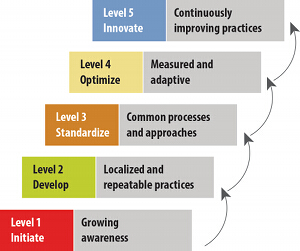
When a Lack of Heroics Best Serves Veterans
A good friend and mentor reminds me regularly that knowledge management is a journey, not a destination. Which makes maturity models the boon companion of the KM discipline. This post eyes the prize through the lens of a new volunteer effort that helps military...
MITRE’s Knowledge Driven Enterprise Strategy: Syncing People, Processes, and Tools for Enhanced Business Outcomes
Knowledge-driven enterprise refers to capturing organizational knowledge in the normal flow of people’s work, and then making it easy for staff to use what they find on behalf of the company or external partners and sponsors. Donna Cuomo, the architect of the KDE...
MITRE’s Knowledge-Driven Enterprise Strategy
MITRE Knowledge-Driven Enterprise Strategy Search KDE Search for: Archives Archives Select Month February 2019 (4) January 2019 (3) December 2018 (2) October 2018 (5) September 2018 (1) August 2018 (1) July 2018 (6) June 2018...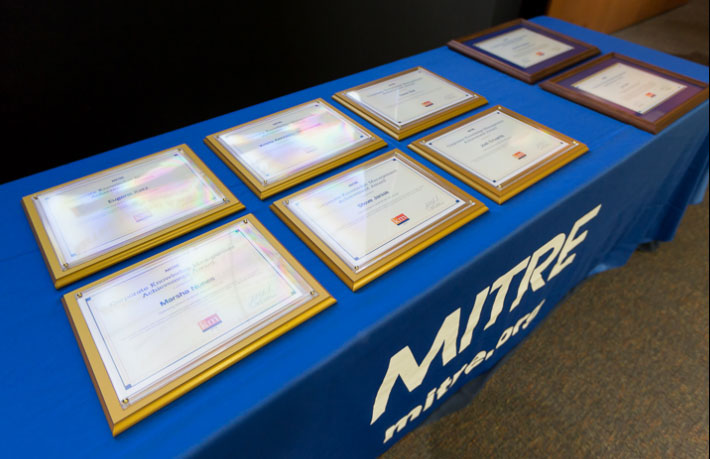
MITRE’s Knowledge Management Award Program
Awards! Who doesn’t like to be recognized for good work? Yet Knowledge Management Awards programs are not ubiquitous. Marcie Zaharee discusses MITRE’s original awards program and its results. In 2016, MITRE will launch a new program, as the company explores the role...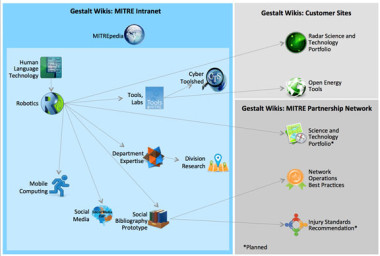
Gestalt Wikis at MITRE: Origins
Gestalt Wikis at MITRE: Origins
This blog post is the first of four in a series about Gestalt Wikis at MITRE. MITRE began using wikis on the corporate intranet in 2005 with the volunteer grassroots creation of MITREpedia. MITREpedia uses open source MediaWiki[1] as its underlying wiki software. The objective as stated in its Main Page was to capture information about MITRE “people, projects, organizations, customers, technology and more.”[2] In a recent conversation with its founder, Harry Sleeper, the motivation behind MITREpedia was elaborated as to provide a collaborative environment where staff could author linked narratives of well-formed, detailed knowledge about their work.

Big Data in Knowledge Management
I believe that knowledge management as a discipline developed because technology enabled the deluge of data we began experiencing about 20 years ago. The ways that we used to organize and share our information were no longer adequate to the task and we needed something new. I’ve spent the last five or six years focusing on data, more specifically on helping organizations treat their data as a strategic asset that requires the same stewardship afforded any other valuable resource within the organization.